Waterpik vs Flossing: Which Actually Cleans Better? (Honest 2026 Guide)
Disclosure: This article contains affiliate links. If you buy through them, I may earn a small commission at no extra cost to you. I only recommend products I believe are genuinely worth it.
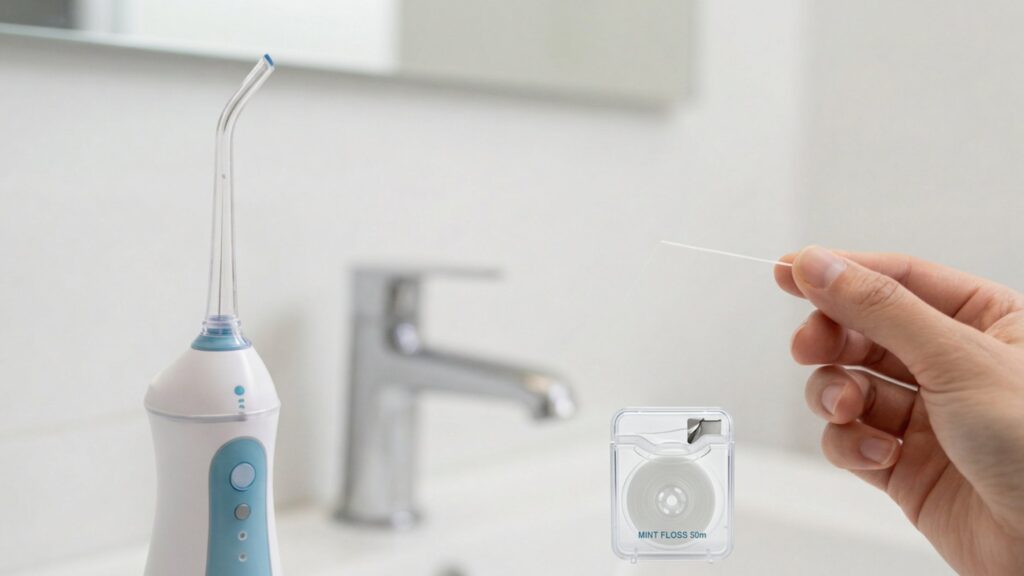
In the Waterpik vs flossing debate, here’s the honest answer up front: both clean between your teeth effectively, and the best one is the one you’ll actually use every day. A Waterpik (water flosser) is easier and gentler for many people — especially with braces or implants — while string floss is cheaper and scrapes the tooth surface in a way water can’t fully match. For most people, the real winner is a combination of the two.
Let’s break down exactly what each does, where it wins, and how to choose.
Quick guide: Waterpik vs flossing in 30 seconds
- Both work—the best is the one you’ll actually do every day.
- Water flosser wins for braces, implants, sensitive gums, and anyone who skips flossing.
- String floss wins for budget, tight contacts, and travel — it scrapes surfaces best.
- For the most thorough clean, use both: floss first, then water floss to flush.
- Tip: Start a water flosser on low pressure if your gums are sensitive.
Waterpik vs flossing at a glance
| Factor | Waterpik (water flosser) | String floss |
|---|---|---|
| Removes food & debris | Excellent, even hard-to-reach spots | Good |
| Scrapes plaque off tooth surface | Good (water pressure) | Excellent (direct contact) |
| Braces, implants, bridges | Much easier | Difficult and fiddly |
| Gum-friendly / sensitive gums | Very gentle | Can be harsh if done roughly |
| Ease & enjoyment | Easy—many people stick with it | Many people skip it |
| Cost | Higher upfront | Very cheap |
| Travel | Bulkier (cordless options help) | Pocket-sized |
| Best for | Braces, dexterity issues, “floss-haters” | Budget, tight contacts, travel |
Waterpik vs flossing: the honest quick answer
If you hate flossing and skip it, a Waterpik is a massive upgrade—because the best interdental cleaning is the kind you’ll actually do. If you already floss well daily, string floss is cheap and excellent, and you may not need a water flosser at all. And if you want the most thorough clean possible, use both: floss to scrape the surfaces, then water-floss to flush everything out.
So the Waterpik vs flossing question really comes down to your habits and your mouth—not one being universally “better.”
What a Waterpik (water flosser) does well.
A water flosser shoots a targeted stream of water between your teeth and along the gumline. Its strengths:
- Reaching the awkward spots. It flushes food and bacteria from places string floss struggles to reach.
- Braces, implants, bridges, and crowns. This is where a water flosser truly shines — it cleans around hardware that makes traditional flossing a nightmare.
- Gentleness. For sensitive or bleeding-prone gums, the gentle water stream is far kinder than aggressive flossing.
- Ease of habit. It’s quick and almost pleasant, so people are far more likely to do it daily.
If your gums bleed when you clean between your teeth, read Why Your Gums Bleed When You Brush—a water flosser is one of the gentler options I recommend there.
What string floss does well
Don’t write off the humble string. Floss still has real advantages:
- Direct scraping. Floss physically hugs and scrapes the side of each tooth, removing the sticky plaque film in a way water pressure alone can’t fully replicate.
- Tight contacts. For very tight gaps between teeth, floss can get in where a water stream just glides past.
- Cost and portability. It’s pennies per use and fits in any pocket or bag.
- No setup. No charging, no water tank, no counter space.
Waterpik vs flossing: Which should you choose?
Decide based on who you are:
- Choose a Waterpik if you have braces, implants, bridges, sensitive or bleeding gums, limited dexterity, or you simply never stick with flossing.
- Choose string floss if you’re on a tight budget, travel light, have very tight contacts, or you already floss thoroughly every day.
- Choose both if you want the most complete clean — it’s the gold standard.
Can you use a Waterpik and floss together?
Yes — and it’s the ideal routine. The most thorough approach is to floss first to break up and scrape plaque off the tooth surfaces, then use the water flosser to flush all the loosened debris out and rinse along the gumline. It takes an extra minute, but it’s the closest you’ll get at home to that just-left-the-dentist clean.
Choosing a water flosser: countertop vs cordless
If you decide a water flosser is right for you, the main choice is between the following:
- Countertop models hold more water, offer more pressure settings, and are ideal if you have bathroom counter space and stay in one place.
- Cordless models are compact, travel-friendly, and great for small bathrooms — they just need recharging and refilling more often.
Look for adjustable pressure (start low if your gums are sensitive) and a comfortable tip that fits your needs (orthodontic tips exist for braces). See the water flosser I recommend.
Pairing a water flosser with the right brush makes a big difference—see my Best Electric Toothbrushes guide for models with gentle, gum-friendly cleaning.
The routine that ties it all together
Whichever you choose, interdental cleaning is just one piece. The full daily routine—brushing technique, timing, tongue care, and protecting your smile from stains—is in my free 7-Day Fresher, Whiter Smile Routine. It walks you through the whole thing one easy habit at a time.
Frequently asked questions: Waterpik vs flossing
The verdict: Waterpik vs flossing
The bottom line on Waterpik vs flossing: the best tool is the one you’ll use every day. A water flosser is the easier, gentler choice for many people — especially with braces, implants, or sensitive gums — while string floss is cheap, portable, and great at scraping tight surfaces. For the most thorough clean, use both.
Grab my free 7-Day Fresher, Whiter Smile Routine to build the full habit, and see a licensed dentist for advice tailored to your mouth.
This guide is general oral-hygiene information for educational purposes only and is not dental or medical advice. For any dental concerns, please consult a licensed dentist.