Manual vs Electric Toothbrush: Which Actually Cleans Better? (Honest 2026 Comparison)
Disclosure: This article contains affiliate links. If you buy through them I may earn a small commission at no extra cost to you. I only recommend products I believe are genuinely worth it.
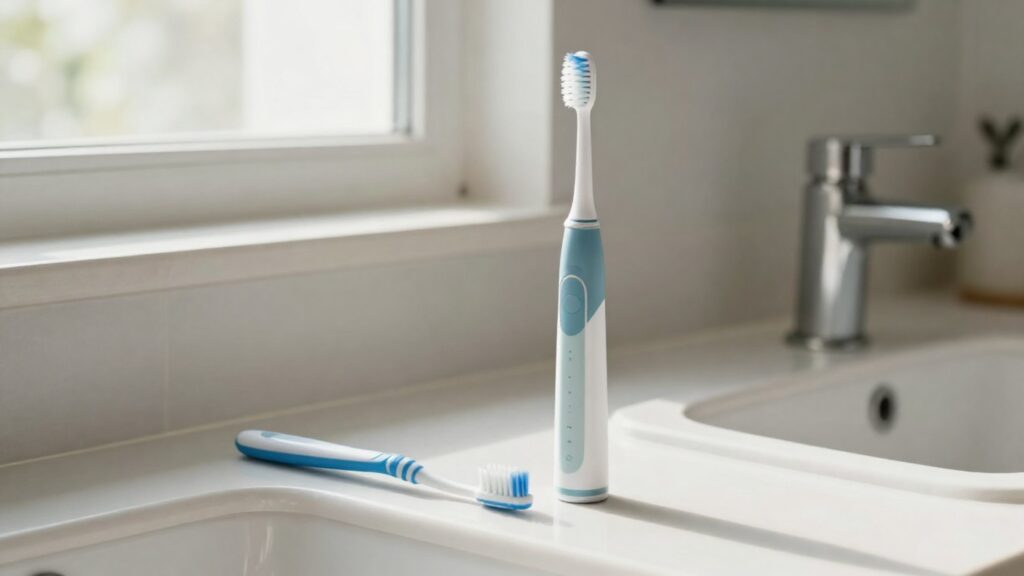
The manual vs electric toothbrush debate has a clear winner on paper—but the honest answer is more useful than the headline. On average, electric toothbrushes remove more plaque and reduce gum inflammation more than manual ones. But a manual toothbrush used properly still does a good job, and the “best” brush is ultimately the one you’ll use correctly, twice a day, without fail.
Below is the straight comparison: what the science actually says, where each type wins, and how to choose the right one for you — not for a marketing brochure.
Manual vs electric toothbrush at a glance
| Factor | Manual toothbrush | Electric toothbrush |
|---|---|---|
| Plaque removal | Good with proper technique | Removes more on average |
| Easy to brush well | Depends entirely on your technique | Does much of the work for you |
| Pressure control | None—easy to brush too hard | Many have a pressure sensor |
| Built-in timer | No (you guess) | Yes—keeps you to two minutes |
| Upfront cost | A dollar or two | Around $40 and up |
| Ongoing cost | Cheap replacements | Brush heads cost more |
| Travel & reliability | Always works, nothing to charge | Needs charging; can fail |
| Best for | Budget, travel, light hands | Most people, gum health, consistency |
Manual vs electric toothbrush: the honest quick answer
If you want one sentence: most people get a better, more consistent clean from an electric toothbrush, mainly because of two features—a built-in timer and a pressure sensor—that quietly fix the two biggest mistakes people make (not brushing long enough and brushing too hard). If you already brush thoroughly, gently, and for the full two minutes with a manual brush, you’re doing great, and the upgrade is optional.
In other words, the manual vs. electric toothbrush question is really about your habits, not just the hardware.
What the science says about electric vs manual toothbrushes
The evidence leans clearly toward powered brushing. A landmark Cochrane review—which pooled dozens of studies—found that electric toothbrushes reduced more dental plaque and more gum inflammation than manual brushing and that the benefit grew the longer people used them. Independent testers like Consumer Reports lab-test electric brushes for exactly this reason, noting that features such as two-minute timers and pressure sensors help people brush more thoroughly and more safely.
The takeaway isn’t that manual brushes don’t work — they do. It’s that, across large groups of real people, electric brushes make a good clean easier to achieve consistently.
Where a manual toothbrush still wins
A manual toothbrush isn’t obsolete. It genuinely beats electric in a few situations:
- Cost. It’s the cheapest way to keep your teeth clean, full stop.
- Travel and reliability. No charging, no battery anxiety, nothing to break — it just works, anywhere.
- Control for light, careful brushers. If you have a gentle, practiced technique, a soft manual brush is perfectly effective.
- Simplicity. No app, no modes, no replacement-head subscription—some people just want to brush their teeth.
If your budget is tight, do not feel pressured to upgrade. A manual brush used well beats an expensive electric brush used carelessly every single time.
Where an electric toothbrush wins
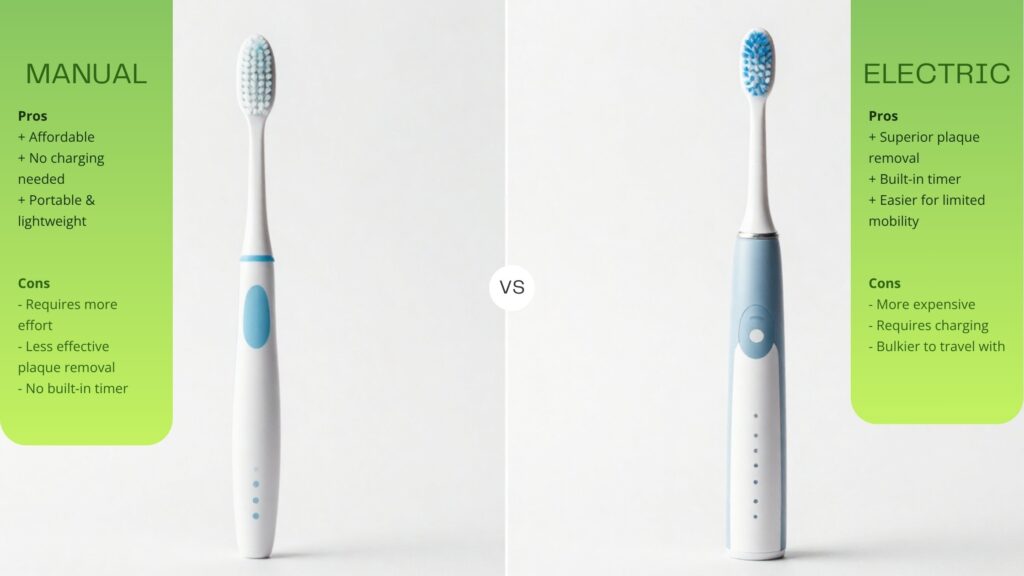
For most people, an electric toothbrush makes the basics easier:
- It removes more plaque on average, especially along the gumline and between teeth.
- The timer keeps you brushing the full two minutes instead of the 45 seconds most people actually manage.
- The pressure sensor stops you scrubbing too hard — a major cause of gum recession and enamel wear.
- It’s easier for some hands. If you have arthritis, limited dexterity, or braces, the brush doing the motion for you is a real advantage.
Want the specifics? I break down the best models for every budget in my Best Electric Toothbrushes guide.
Manual vs electric toothbrush: Which should you choose?
Here’s how I’d decide, based on who you are:
- Choose a manual toothbrush if you’re on a tight budget, you travel constantly, or you already have a gentle, thorough, two-minute technique.
- Choose an electric toothbrush if you tend to rush, brush too hard, have gum issues or braces, or you simply want the easiest path to a consistently good clean.
- Honestly, most people should choose electric—not because manual is bad, but because the timer and pressure sensor remove the guesswork.
Does it even matter? Technique beats the tool
Here’s the part the manual vs electric toothbrush arguments usually skip: how you brush matters more than what you brush with. The best brush in the world won’t help if you scrub hard for 30 seconds and skip the gumline. The fundamentals win:
- Brush twice a day for the full two minutes.
- Use a soft brush head and a gentle, guided motion — never scrub.
- Clean between your teeth daily (floss or interdental brushes).
- Don’t rinse with water straight after brushing — let the fluoride keep working.
Get those right, and both a manual and an electric toothbrush will serve you well. My free 7-Day Fresher, Whiter Smile Routine walks you through the whole technique, one easy habit a day.
If you’re ready to upgrade
If you’ve decided electric is right for you, you don’t need to overspend. A solid mid-range brush with a pressure sensor and a timer captures almost all of the benefit—premium models mostly add quietness and smart features. My full breakdown ranks the best options for every budget, from value picks to flagships: The Best Electric Toothbrushes guide.
Frequently asked questions: manual vs electric toothbrush
The verdict: manual vs electric toothbrush
The honest bottom line on manual vs electric toothbrushes: electric wins for most people, mainly because the timer and pressure sensor make a good clean easier to repeat every day. But a manual toothbrush used properly is still effective, cheap, and travel-proof—so if that’s you, brush on with confidence.
Whichever you choose, technique and consistency matter most. Grab my free 7-Day Fresher, Whiter Smile Routine to lock in the habits, and see a licensed dentist for advice tailored to your mouth.
This guide is general oral-hygiene information for educational purposes only and is not dental or medical advice. For any dental concerns, please consult a licensed dentist.