Best At-Home Teeth Whitening Kits in 2026: What Actually Works (Honest Guide)
Disclosure: This article contains affiliate links. If you buy through them, I may earn a small commission at no extra cost to you. I only recommend products I believe are genuinely worth it.
Shopping for the best at-home teeth-whitening kit can be overwhelming—every brand promises a dazzling smile. Here’s the honest version: a good at-home teeth whitening kit can noticeably lift everyday surface stains from coffee, tea, and wine, but results vary from person to person, and no kit replaces a dentist for deeper or uneven discoloration. The right kit for you depends mostly on your sensitivity and your budget.
Below is what actually works, what to look for, and how to whiten safely.
Quick guide: at-home teeth whitening in 30 seconds
- At-home kits lift surface stains well; deep or uneven discoloration often needs a dentist.
- Peroxide is stronger but more likely to cause sensitivity; PAP is gentler and best for sensitive teeth.
- LED lights are a nice-to-have, not the main event — the whitening agent does the work.
- Best budget starting point: whitening strips.
- Always follow the directions exactly, expect results to vary, and see a dentist first if you have dental work or concerns.
How at-home teeth whitening actually works
Most whitening kits work in one of two ways:
- Peroxide-based (hydrogen or carbamide peroxide) is the classic, evidence-backed approach. It can lift both surface stains and some deeper discoloration. The trade-off is that it more commonly causes temporary tooth sensitivity.
- PAP-based (phthalimidoperoxycaproic acid) is a newer, gentler alternative that many people with sensitive teeth tolerate better. It’s generally best at surface stains.
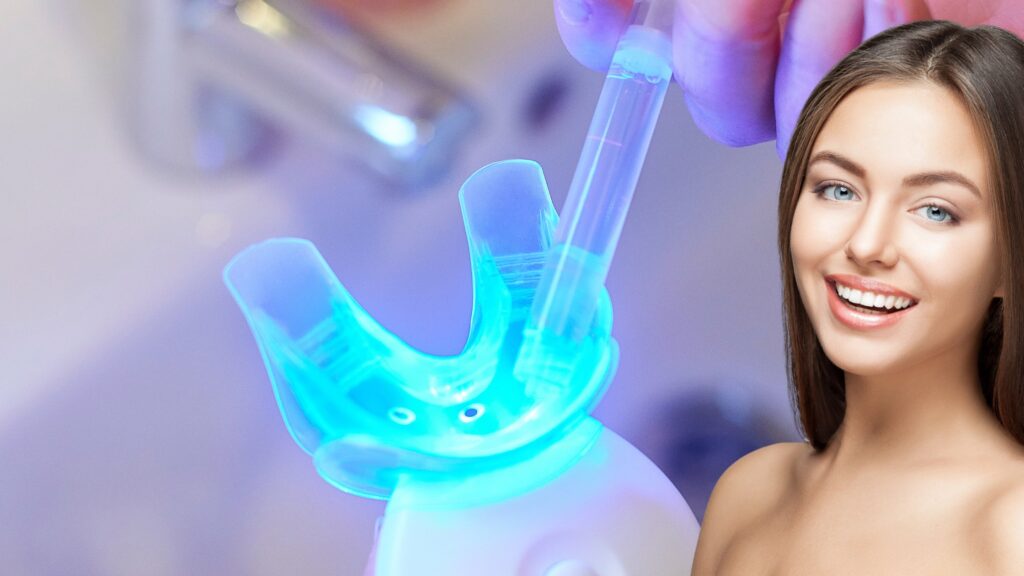
Some kits add an LED light. The evidence for LEDs dramatically boosting results is mixed—treat it as a nice-to-have, not the main event. And it’s worth setting expectations honestly: at-home kits handle surface (extrinsic) stains well, but deep (intrinsic) discoloration—from medication, injury, or aging—often needs a dentist.
What to look for in an at-home teeth whitening kit
Judge any at-home teeth-whitening kit on these:
- Enamel safety. Stick with reputable brands and follow the directions exactly. More is not better.
- Sensitivity options. If your teeth react, look for lower peroxide concentrations or a PAP formula and “sensitive” settings.
- Fit. Trays that mould to your teeth (or pre-filled strips that adhere well) keep gel off your gums.
- Clear instructions and realistic claims. Honest brands tell you results take time and vary.
- Value. Compare the cost per treatment, not just the sticker price.
The best at-home teeth whitening kits for every budget
Best overall at-home teeth whitening kit
A balanced peroxide-based kit with well-fitting trays and a sensitivity option, such as the Auraglow whitening kit, Philips Zoom, or the Glo Science whitening kit, suits most people.
Best for sensitive teeth
A PAP-based kit or a low-concentration peroxide formula is the gentler route for reactive teeth.
Best budget kit
Whitening strips are the most affordable way to lift everyday stains and a great entry point.
Best LED kit
If you like the guided, all-in-one experience, an LED kit with a tray and timer keeps things simple. The Glo Science whitening kit is a good option for an all-in-one experience.
Best for touch-ups
A whitening pen such as the Glo Science Whitening pen and gel is handy for maintaining results between fuller treatments and for travel.
How to keep your whitening results
Whitening isn’t permanent—what you do daily matters more than any single kit:
- Rinse with water after coffee, tea, red wine, and dark sodas; sip stainers through a straw.
- Don’t smoke — it’s one of the biggest causes of staining.
- Brush twice a day and clean between your teeth to stop new stains from setting in.
My free 7-Day Fresher, Whiter Smile Routine covers the simple stain-protecting habits that make any whitening last longer.
Is at-home teeth whitening safe for your teeth?
Used as directed, reputable at-home whitening kits are generally considered safe for most people. A few honest cautions:
- Temporary sensitivity is common and usually fades after you stop. Space out treatments if it flares.
- Don’t overuse. Following the schedule on the box protects your enamel and gums — doubling up doesn’t whiten faster.
- See a dentist first if you have gum disease, lots of fillings or crowns (whitening won’t change their color), or deep/uneven discoloration. A dentist can also offer stronger, supervised options.
Frequently asked questions: at-home teeth whitening kits
The verdict: choosing an at-home teeth whitening kit
The best at-home teeth-whitening kit is the one that matches your sensitivity and budget — a peroxide kit for most people, a PAP kit for sensitive teeth, and strips for an affordable start. Keep your expectations honest, follow the directions, and protect your results with good daily habits.
Grab my free 7-Day Fresher, Whiter Smile Routine to make any whitening last, and see a licensed dentist before whitening if you have dental work or concerns.
This guide is general oral-hygiene information for educational purposes only and is not dental or medical advice. Whitening results vary, and you should consult a licensed dentist before starting any whitening treatment, especially if you have existing dental work or concerns.