
Enamel Erosion From Your Daily Drinks: How to Protect Your Smile in 2026
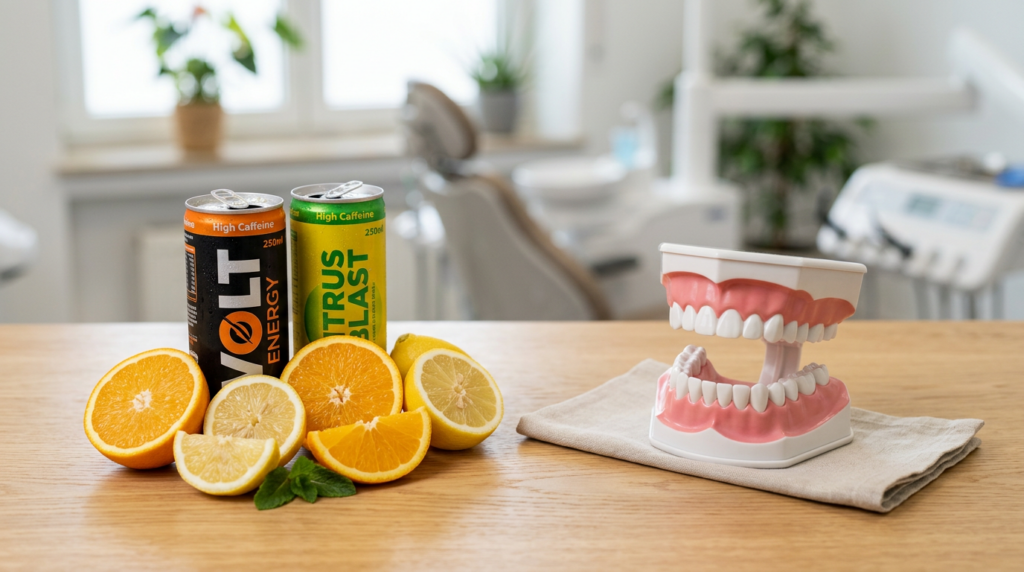
If your afternoon energy drink or sparkling water habit feels harmless, new 2026 research says otherwise. Enamel erosion, which is the slow, permanent wearing away of your teeth’s protective outer layer, is quietly accelerating in adults who sip acidic beverages throughout the day. A recent meta-analysis found that energy drinks wear away enamel 25-30% faster than regular cola, and even “healthier” swaps like flavored sparkling water can lower your mouth’s pH enough to soften enamel over time.
The tricky part about this process is that it doesn’t announce itself with pain right away; by the time you notice sensitivity or yellowing, the damage is already done. Unlike a cavity, eroded enamel doesn’t grow back. That’s why understanding what causes it, spotting the early warning signs, and building the right home-care routine matters more than ever in 2026.
In this guide, we’ll break down exactly what’s happening to your teeth, which drinks are the biggest offenders, and a simple, dentist-informed routine including products worth adding to your bathroom counter to protect your smile going forward.
Quick Guide: 7 Steps to Stop Enamel Damage Today
- Wait 30–60 minutes before brushing after acidic drinks; brushing too soon can scrub away softened enamel.
- Use a straw for acidic or sugary drinks so liquid bypasses your front teeth.
- Rinse with plain water immediately after coffee, soda, energy drinks, or citrus.
- Switch flavored sparkling water to plain on most days; save flavored varieties for occasional treats.
- Chew sugar-free gum after meals to boost saliva flow and speed up remineralization.
- Use a fluoride or remineralizing mouthwash daily to help rebuild weakened enamel.
- Brush with a soft-bristled electric toothbrush; it’s gentler on already-thinned enamel than manual scrubbing.
What Is Enamel Erosion?
Enamel erosion happens when acids in your mouth dissolve the mineral structure of your tooth enamel, the hard, translucent outer shell that protects the softer dentin underneath. Enamel is the hardest substance in the human body, but it has one major weakness: acid.
How the Damage Happens
Every time you eat or drink something acidic, your mouth’s pH drops. Once it falls below about 5.5, the acid begins pulling minerals out of your enamel in a process called demineralization. Saliva normally neutralizes this and helps redeposit minerals (remineralization), but if you’re sipping acidic drinks all day, your mouth never gets enough recovery time between acid attacks. Over months and years, that constant tug-of-war tips in favor of erosion.
Why This Damage Can’t Be Reversed
Unlike bone, enamel has no living cells and cannot regenerate once it’s gone. Dentists can help you strengthen and protect what’s left through fluoride treatments and remineralizing products, but visibly worn or thinned enamel is permanent. That’s what makes prevention and catching it early so important.
The Drinks Fueling Tooth Erosion in 2026
Energy Drinks: The Worst Offender
Energy drinks have emerged as one of the biggest drivers of this damage this year. A 2026 meta-analysis found that after just six months of daily energy drink consumption, visible enamel thinning showed up in 45% of consumers, and after two years, average enamel loss reached 0.51 mm—a significant amount for a tissue that never comes back.
Sparkling Water: Better, But Not Risk-Free
Plain sparkling water is far less erosive than soda, and recent research suggests it’s a reasonable lower-risk swap when consumed in moderation. But flavored sparkling waters, the citrus and berry varieties many people reach for, carry a lower pH that can still soften enamel, especially when sipped slowly over hours instead of consumed in one sitting.
Soda, Juice, and Sports Drinks
Classic culprits remain classic culprits. Soda, fruit juice, and sports drinks combine high acidity with sugar, giving oral bacteria fuel to produce even more acid. Sipping any of these throughout the day rather than drinking them quickly with a meal is one of the fastest ways to accelerate the damage.
Signs You Might Already Have Enamel Damage
Sensitivity to Hot, Cold, or Sweet
As enamel thins, the dentin underneath becomes more exposed, and dentin is packed with tiny tubules that connect directly to nerve endings. This is why increased sensitivity to hot, cold, or sweet foods is often the first noticeable sign of the problem.
Yellowing or Translucent Edges
Enamel is naturally white, while dentin underneath has a yellowish tint. As the erosion progresses, teeth can look more yellow overall, and the edges of front teeth may appear slightly translucent or see-through, a subtle but telling sign worth mentioning to your dentist.
Don’t Miss Our Next Dental Guide
Enjoying this breakdown? This is exactly the kind of research-backed guidance we send weekly. Subscribe to the Boateng Dental Newsletter for exclusive tips, product deals, and early access to new dental guides before they’re published on the blog.
Get our free 7-day routine guide and subscribe to the Boateng Dental Newsletter
Rebuilding Your Routine: Products That Help
Once you know this is a risk, the next step is adjusting your at-home routine. Here are a few dentist-backed product categories worth having on hand.
Electric Toothbrushes for Sensitive, Eroded Enamel
A pressure-sensing electric toothbrush helps prevent over-brushing, which can worsen damage. Models from Oral-B and Philips Sonicare offer gentle, sensitive-mode settings designed specifically for enamel that’s already under stress. Read the best electric toothbrush guide 2026 for more information about the electric toothbrush that is right for you.
Fluoride & Remineralizing Mouthwash
A daily fluoride rinse helps redeposit minerals into weakened enamel and can meaningfully slow the progression of this damage when used consistently.
Water Flossers for Gentle, Acid-Safe Cleaning
Water flossers rinse away food particles and bacteria without the abrasive scrubbing motion of string floss or a hard-bristle brush, making them a comfortable option for anyone managing enamel sensitivity. Find out more about waterpiks vs. flossers in this article
Is Teeth Whitening Safe If You Already Have Enamel Erosion?
This is one of the most common questions we hear, and it’s a fair one. Whitening itself doesn’t cause enamel damage, but repeated, unsupervised whitening can increase sensitivity in teeth that already have thinned enamel. If you’re dealing with visible erosion, look for ADA Seal of Acceptance products, use them exactly as directed, and consider a dentist consultation before starting a whitening kit. Get to know the truth about cheap whitening kits in here and the best at-home whitening kits in this guide
I recommend the Crest 3D Whitestrips Professional Effects for safe and effective whitening
Before You Go: Get our free 7-day routine guide and join the Boateng Dental Newsletter
Want more guides like this delivered straight to your inbox? Subscribers get first access to new dental guides, exclusive product deals, and practical tips you won’t find anywhere else on the blog.
Get our free 7-day routine guide and subscribe to the Boateng Dental Newsletter
Frequently Asked Questions
Conclusion
Enamel erosion is one of those dental issues that builds quietly in the background of everyday habits: a daily energy drink here, a flavored sparkling water there. The good news is that small, consistent changes (a straw, a water rinse, the right toothbrush, and mouthwash) can meaningfully slow it down and protect the smile you have. If you’re noticing new sensitivity or changes in your teeth’s appearance, don’t wait; book a checkup with Boateng Dental, and let’s catch it before it progresses further.
Ready to protect your smile? Schedule your appointment with Boateng Dental today