Bleeding Gums: Why They Happen and When to Worry
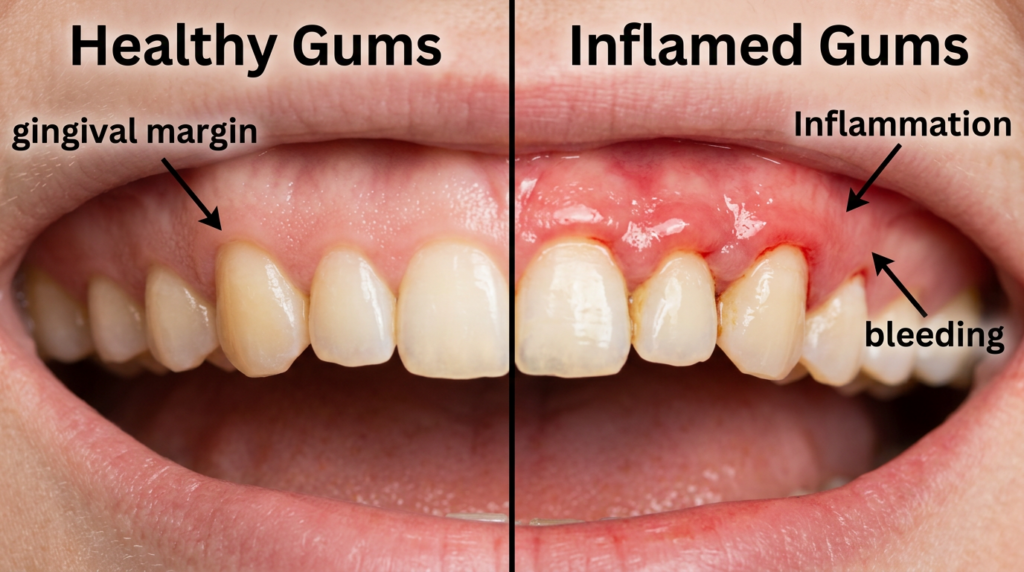
You spit after brushing and notice pink in the sink. Or you bite into something and see a little blood. It is one of the most common things people notice about their mouths—and one of the most commonly ignored.
Here is the truth, plainly: bleeding gums are not normal, and they are not something to brush past (or brush around). In almost every case, they are your gums waving an early warning flag. The good news is that when you catch that warning early, the problem is easy to reverse. Ignore it, and it can quietly become one of the leading causes of tooth loss.
Let’s look at why gums bleed, what it means, and exactly what to do about it.
Quick guide
- Bleeding when you brush or floss is not normal — it’s usually the first sign of gum disease (gingivitis).
- The instinct to brush less because gums bleed is backwards; gentle, consistent cleaning is what heals them.
- Early gum disease is reversible. Left untreated, it can progress to periodontitis and lead to tooth loss.
- Gum disease is linked to wider health problems, including heart disease and diabetes.
- A professional scale and polish, plus good daily habits, fix most cases.
- Don’t ignore bleeding gums — they’re an early warning. Book a check-up.
Why are my gums bleeding?
The most common cause, by far, is plaque — the soft, sticky film of bacteria that builds up along the gumline every day. When plaque is not thoroughly removed, it irritates and inflames the gums. Inflamed gums become swollen and tender and bleed easily. This early stage is called gingivitis, and it is extremely common.
Other things can cause or worsen bleeding gums:
- Brushing too hard or with a hard-bristle brush can damage the gum
- A new flossing routine (a little bleeding for the first few days is normal as gums get healthier)
- Hormonal changes, such as those during pregnancy, make gums more sensitive
- Smoking, which harms gum health and can also mask bleeding, hiding a problem
- Certain medications and some medical conditions, including diabetes
- Vitamin deficiencies, though these are less common
If your gums bleed regularly, plaque and gingivitis are the most likely culprits — and the most fixable.
The mistake almost everyone makes
When their gums bleed, most people’s instinct is to be gentler—to brush that area less or avoid flossing there. This feels logical. It is exactly the wrong move.
Gums bleed because they are inflamed by bacteria that have not been cleaned away. Cleaning less leaves more bacteria, which makes the inflammation worse, which makes the bleeding worse. The cycle continues.
The fix is gentle, thorough, consistent cleaning — not avoidance. When you clean the area properly (without scrubbing aggressively), the bacteria clear, the inflammation settles, and within a week or two the bleeding usually stops. The bleeding is not a reason to back off; it is a sign you need to clean there properly.
When bleeding gums become serious
Gingivitis is the reversible early stage. If it is left untreated for a long time, it can progress to periodontitis—a more serious gum disease where the infection spreads below the gumline and begins to destroy the bone and tissue that hold your teeth in place.
Warning signs that gum disease may be advancing include:
- Gums that are receding (teeth look “longer”)
- Persistent bad breath or a bad taste
- Gums that are pulling away from the teeth, forming pockets
- Teeth that feel loose or are shifting
- Pus around the gumline
Periodontitis is the leading cause of tooth loss in adults. The damage it does to bone cannot be undone, which is exactly why catching gum disease at the bleeding-gums stage matters so much.
Your gums and the rest of your body
Gum disease is not just a mouth problem. A growing body of research links gum disease to serious general health conditions, including heart disease, stroke, and poorly controlled diabetes. The mouth is a gateway to the body, and chronic infection in the gums appears to affect health well beyond the teeth.
This is one more reason to take bleeding gums seriously. Healthy gums are part of a healthy body.
How to fix bleeding gums
For most people, the path back to healthy gums is straightforward:
- Brush properly, twice a day, with a soft-bristled brush and fluoride toothpaste—angled gently at the gumline, not scrubbed.
- Clean between your teeth daily with floss or interdental brushes. This reaches the plaque that a toothbrush cannot.
- See a dentist for a professional cleaning. Once plaque hardens into tartar, no amount of brushing removes it — only a professional scale and polish can. This is often the missing piece.
- Don’t smoke, and manage conditions like diabetes that affect gum health.
If you do these things and the bleeding does not improve within two weeks, or if you have any of the warning signs of advancing gum disease, see a dentist promptly.
The right tools make it easier
Healthy gums come down to consistent daily cleaning, and the right tools make that far easier to keep up:
Some links below are affiliate links. If you buy through them, Boateng Dental may earn a small commission at no extra cost to you. As an Amazon Associate, we earn from qualifying purchases. We only recommend products we’d suggest to our own patients.
- A soft-bristled or electric toothbrush — gentle on gums, effective on plaque.
- Interdental brushes — excellent for cleaning between teeth and along the gumline.
- A water flosser — a gentle, effective option, especially if string floss makes your gums bleed at first.
- Fluoride toothpaste — the daily foundation of healthy teeth and gums.
Free download: the 7-day healthy gums checklist
Want to stop the bleeding fast? Get our simple, dentist-approved 7-day routine to calm inflamed gums—sent straight to your inbox.
✉️ Get the free checklist (we’ll also send occasional oral-health tips; unsubscribe any time.)
Summary
Bleeding gums are common, but they are not normal — they are usually the earliest sign of gum disease, and they are a warning worth heeding. The cause is almost always plaque, and the fix is gentle, thorough, consistent cleaning plus a professional scale and polish, not cleaning the area less. Caught early at the gingivitis stage, bleeding gums are completely reversible. If ignored, they can progress to periodontitis, the leading cause of tooth loss, and may affect your wider health too. If your gums bleed regularly, treat it as your cue to book a check-up.
Frequently asked questions
Healthy gums start with a check-up
If your gums bleed, a quick visit and a professional clean can stop the problem before it grows. Book with Boateng Dental for a gentle, thorough check-up.
This article is for general information and is not a substitute for a professional dental examination. Always seek care from a qualified dental professional.