Why Your Tooth Hurts When You Bite (Dentist Explains the Real Causes)
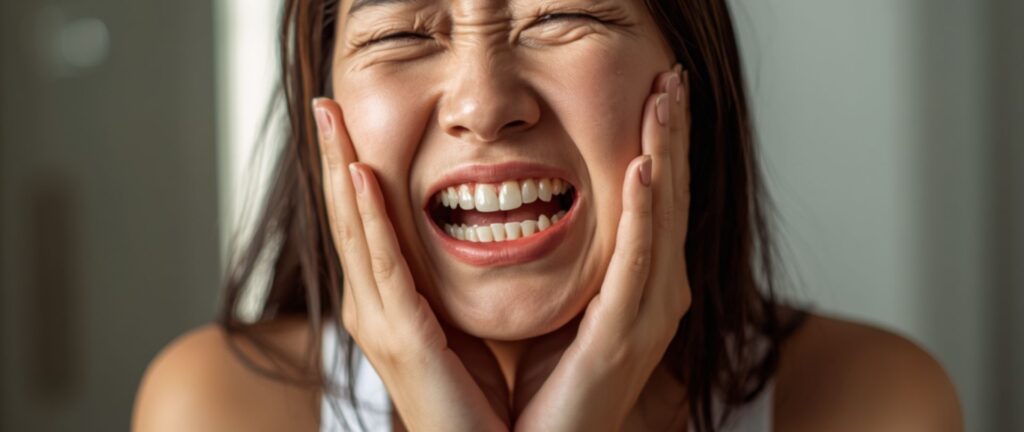
It’s a new year, and you decided to eat healthier! So, you reached for a juicy apple, took a big, confident bite, and ouch! You got an electric shock in your mouth! A sharp pain that instantly made you regret your healthy choice. If your tooth hurts when you bite down—but feels fine otherwise—you are right to be concerned.
That sudden pain is your teeth sending you a strong warning you should not ignore. This type of pain is not random, and it’s rarely something you should ignore. Our teeth are designed to withstand pressure from biting and chewing, so if you ever feel any pain or discomfort while doing so, it is not normal.
If you have ever experienced this, you are not alone. As a practicing dentist, I see this complaint almost daily. Patients often assume it is “nothing serious” until the pain worsens or turns into a much bigger (and more expensive) problem. Bite pain is a common dental problem that occurs when the inner part of the tooth, the surrounding gums, or the supporting bone is affected.
This tooth pain may be minor due to temporary sensitivity, or it could be a sign of a more serious dental issue that needs urgent professional attention. In this guide, I’ll explain the following:
- The most common causes of pain when biting
- How to tell which ones are urgent
- What you can safely do now—and what you shouldn’t delay
Quick Guide: What Your Pain from Biting Might Mean
| Type of pain | Most Likely Cause |
| Sharp, sudden pain | Cracked Tooth |
| Throbbing pain | Infection or abscess |
| Pain after a recent filling | Occlusal trauma or bite imbalance |
| Sharp pain of short duration | sensitivity |
| Pain only on hard foods | Loose filling or crown or loose tooth |
What Does It Mean When a Tooth Hurts Only When You Bite?
Pain on biting usually means one thing:
Something inside or around the tooth is being stressed under pressure.
Unlike a constant toothache, biting pain often points to the following:
- Structural damage
- Inflammation
- Infection
- Bite imbalance
Let’s break down the real causes.
1. A Cracked Tooth (The #1 Cause Dentists See)
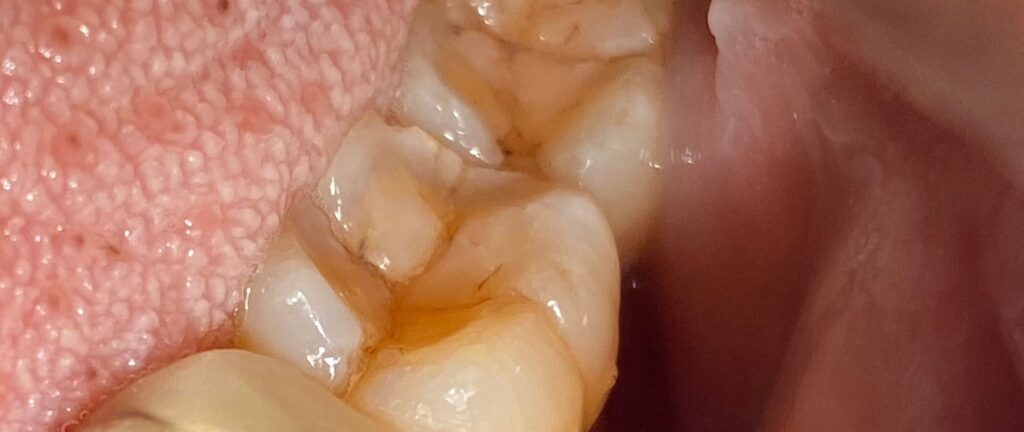
A cracked or fractured tooth is the leading cause of sharp pain when biting in patients that I see as a dentist. Chewing ice, using your teeth as an implement to open a bottle of beer or soda, or unexpectedly biting into a small piece of bone or stone in your diet, can result in a crack.
Even a small invisible crack can increase pressure on the inner part of the tooth, irritating the nerve and causing intermittent pain. A hairline crack in a tooth can be invisible to the eye—and even to X-rays.
When you bite:
- The crack opens slightly
- The inner nerve is irritated
- You feel a sharp, localized pain
Common signs include the following:
- Pain when chewing hard foods
- Pain that comes and goes
- Sensitivity without visible decay
Dentist Note
Cracks don’t heal on their own. Left untreated, they can lead to nerve death or tooth loss. Smaller cracks may be treated with minor procedures such as bonding or protective crowns, while chronic or severe pain may require root canal therapy or, in some cases, extraction.
2. Tooth Sensitivity and Pain when Biting
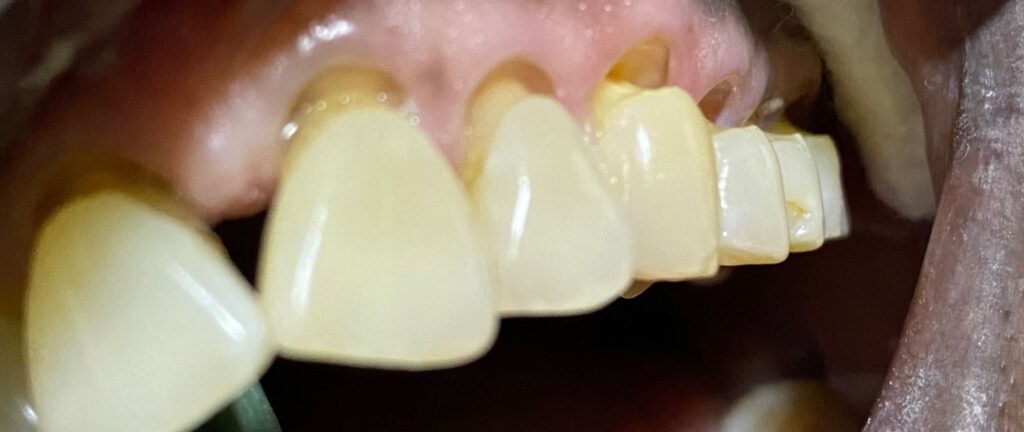
Tooth sensitivity occurs when the protective enamel wears down or the gums recede, exposing the underlying soft tissue, called dentin. Dentin contains tiny channels or tubules that connect directly to the tooth’s nerve, which is why exposed dentin can cause sharp pain when biting, chewing, or consuming hot or cold foods and drinks.
The causes of enamel loss include:
- Abrasion: Dental abrasion is the physical or mechanical, non-carious loss of tooth enamel due to external frictional forces other than tooth-to-tooth contact. The causes of dental abrasion include:
- Aggressive brushing
- Wrong brushing technique
- The use of a hard-bristle toothbrush
- habits such as the biting of pins and needles by dressmakers, tailors, and seamstresses
- Attrition: Dental attrition is the gradual loss of tooth tissue due to excessive direct tooth-to-tooth contact. Some of the causes of dental attrition include:
- Grinding (bruxism)
- Clenching
- Erosion: Dental erosion is the irreversible loss of tooth tissue due to the effect of acid on the tooth tissue. Some of the causes of dental erosion include:
- Diet (soda, fruit juices)
- Gastroesophageal Reflux Disease (GERD)
- Excessive teeth whitening.
Signs to look out for:
- sensitivity to hot, cold, or sweet
- yellowish discoloration of the tooth
- The tooth looks shorter
- The tooth develops sharp edges that break easily
Dentist Note
While mild sensitivity can often be managed with the use of desensitizing toothpaste such as Sensodyne, desensitizing mouthwash, and gentle brushing with a soft-bristle manual toothbrush or an electric toothbrush, persistent or severe sensitivity should be examined by a dentist for evaluation and appropriate treatment
3. Cavities and Tooth Decay:
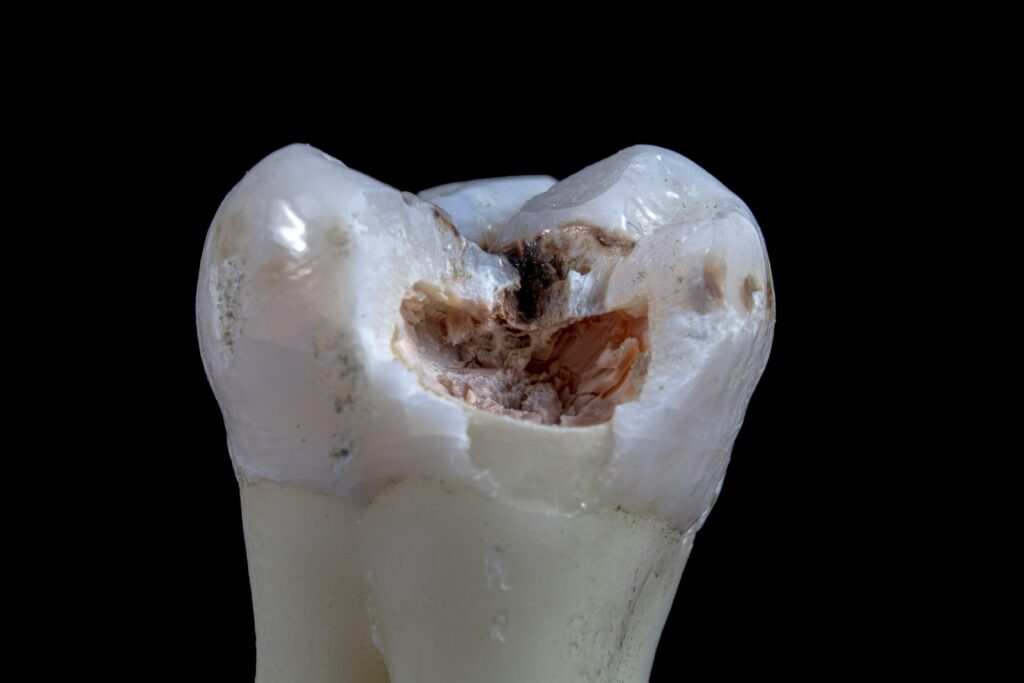
One of the most common causes of pain when biting is tooth decay. When bacteria feed on sugars left on the enamel, they produce acids that gradually weaken and erode the tooth surface, leading to cavities. As decay progresses into the dentin, even slight pressure from chewing or biting can irritate the tooth’s nerve and cause sharp pain.
Common signs include:
- A cavity or hole in the tooth
- discoloration of the tooth
- Food packing after eating
- Sharp pain of short duration on biting
Dentist Note
Cavities do not heal on their own; they will only get bigger and deeper if left untreated. In the early stages, cavities can often be treated with simple procedures such as dental fillings. However, persistent or severe pain usually indicates advanced decay and may require root canal treatment to prevent further damage or infection.
4. Tooth Infection or Abscess:
A dental infection or abscess is a serious cause of pain when biting or chewing. It develops when bacteria invade the soft inner tissue of the tooth (pulp) or the gum, often due to untreated cavities, cracked teeth, or gum disease. As the infection progresses, pus (thick fluid) builds up inside the tooth or jawbone, creating pressure that can cause intense pain, especially when biting. When you bite, the pressure increases—causing pain
Red flags
- Swelling
- Bad taste or smell
- Throbbing pain
- Fever or fatigue (in severe cases)
Dentist note
Dental abscesses do not heal on their own; they require prompt professional treatment, such as drainage, root canal therapy, or tooth extraction to prevent the infection from spreading.
5. Gum disease or Bone Loss
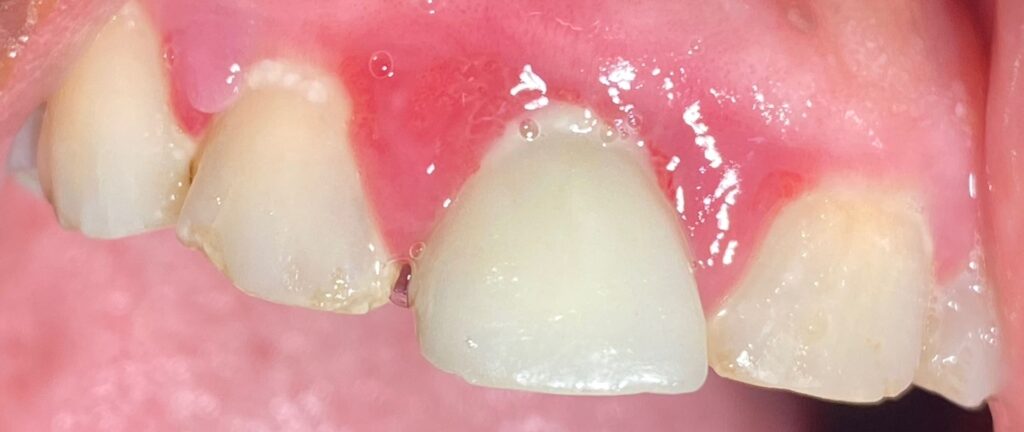
Gum disease can also cause discomfort and pain when biting. Inflamed and infected gums can lead to gum recession, exposing the teeth’s roots and making teeth sensitive to pressure. Gum disease can weaken the bone supporting the teeth and cause pain when chewing.
You may notice:
- Bleeding gums
- Gum recession
- Teeth feel “different” when biting
- Swelling of the gums
- Bad breath
Dentist Note
The pain here often feels dull or sore rather than sharp. Early diagnosis and treatment, such as professional cleaning or periodontal therapy, can relieve the pain and lead to the healing of the gums.
6. Bite Problems (Occlusal Trauma)
Sometimes the tooth itself is healthy, but your bite is not. If one tooth hits harder than the others, then:
- It absorbs excessive force
- Pain develops over time
- The tooth may shift or drift
This is especially common after:
- New fillings
- Dental crowns
- Orthodontic treatment
Dentist Note
These symptoms progress and do not resolve on their own. They require the attention of a dentist who will examine your bite to identify where the imbalances are and correct them by reducing high spots that cause the bite imbalance
7. Loose or Failing Dental Filling or Crown
Dental restorations don’t last forever. If a filling or crown becomes loose:
- Biting causes movement
- The tooth underneath becomes irritated
- Pain occurs only under pressure
Dentist Note
This is common, years after dental work, and very fixable if caught early. Act promptly
When Tooth Pain on Biting Is an Emergency
You should see a dentist as soon as possible if you have:
- Swelling of the face or gums
- Severe or worsening pain
- Fever
- Pain that wakes you at night
Delaying care often turns a simple fix into a complex procedure
What You Can Do Right Now (Safe Steps)
While waiting to see the dentist:
- Avoid chewing on the painful side
- Avoid hard or sticky food
- Maintain gentle oral hygiene
- Use a soft-bristled toothbrush
Do not:
- Ignore the pain
- Self-medicate excessively
- Assume it will “go away.”
Frequently Asked Questions
The Bottom Line (Dentist Perspective)
If your teeth hurt when biting or chewing, don’t ignore it; early dental care can relieve bite pain and prevent more serious problems. Stay informed and protect your teeth. If bite pain persists, worsens, or is accompanied by swelling, see a dentist promptly!
Here is the good news! Although some dental problems cannot be completely avoided, the risk of tooth pain when biting can be minimized by practicing these simple habits.
- Brush gently twice daily. Use a soft-bristle brush and fluoride toothpaste to protect enamel and reduce tooth sensitivity.
- Floss daily in between teeth to remove particles and plaque that brushing may miss. This reduces the risk of cavities and infections.
- Limit the intake of sugary foods. Sugars feed bacteria, and acids erode enamel. Taking these in moderation helps prevent decay and sensitivity.
- Stay hydrated. Drinking water washes food particles, neutralizes acids, and supports saliva’s protective role.
- Regular dental check-ups. Routine visits help to detect problems early. Professional checks and teeth cleaning support your dental health.
Dr Boateng has reviewed this article. Dr. Boateng is a licensed dentist who is focused on helping patients make smarter, evidence-based decisions about their oral health